Introduction

Supervisor: China Association for Science and Technology
Organizer: Chinese Nuclear Society
Publisher: Editorial Board of Nuclear Science and Engineering
Address: No. 43 Fucheng Road, Haidian District, Beijing, China
Tel:010-88828647/1576
E-mail: hkxygc_gz@aep.com.cn, hkxygc@aep.com.cn
Postal Issue No. 82-603
ISSN:0258—0918
CN:11—1861/TL

Design, Verification and Development of Advanced Nuclear Reactor Systems for HPR1000
LU Xianghui;WANG Xin;CAI Dechang;HU Yousen;LU Donghua;WANG Ting;ZHAO Changyou;HU Yisong;CHEN Peng;SU Qianhua;LIN Zhikang;CAO Jianhua;ZHANG Wei;Under the global drive toward carbon neutrality, nuclear energy stands as the only mature, clean baseload power source capable of large-scale substitution for fossil fuels. Its safe and efficient development is critical for China's energy transition. This paper focuses on the first-of-a-kind HPR1000 demonstration project in western China-Unit 3 of the Fangchenggang Nuclear Power Plant, systematically elaborating on design innovations, multidimensional verification methodologies, and development pathways for its nuclear reactor system.Breakthrough technologies including the 177-assemblies core design, 15% thermal safety margin, and hybrid active-passive safety architecture have been comprehensively validated through integral hydraulic experiments, flow-induced vibration tests, and first-unit commissioning. Key outcomes demonstrate: superior conformity of core physics parameters compared to second-generation reactors, beyond-expectation performance of passive safety systems, and achievement of zero unplanned reactor trips or turbine trips during commissioning. Finally, this paper outlines future development directions such as advance reactor control system and advance reactor protection system, laying the technical groundwork for further enhancing the safety and operational flexibility of nuclear power units in China.
Application Research on Nuclear Data Uncertainty Quantification Methods in HPR1000
ZHAO Changyou;LU Xianghui;XU Huaijin;GUO Lin;ZHU Yuxiang;CAI Dechang;MA Cang;This paper presents and validates a forward uncertainty propagation methodology(s-DPAM) for quantifying the nuclear data uncertainties in the independently developed thirdgeneration PWR, HPR1000. The method integrates nuclear data covariance matrices with latin hypercube sampling(LHS). Multi-group covariance matrices for key reactions of major nuclides(~1H, 16O, 235U, 238U) were processed from the ENDF/B-Ⅶ.0 using NJOY. Subsequently, 300 multi-group cross-section samples were generated using an improved LHS approach by UNICORN. Assembly and core physics calculations, performed with the PCM, were coupled with UNICORN for uncertainty propagation analysis. Numerical results for the HPR1000 under BOL and HFP conditions indicate that the maximum uncertainties in assembly relative power, fast neutron flux, and thermal neutron flux are 5.12%, 4.92%, and 5.19%, respectively. The spatial distributions of these uncertainties exhibit a trend of initially decreasing from the core periphery toward the center, followed by an increase. The uncertainties in FQ and FΔH are 1.63% and 1.57%, respectively, which are consistent with results from traditional PWR using statistical methods based on measured data.
Research on Spatial Effect Analysis and Correction Method of Control Rod Worth Measurement in HPR1000 Core
XU Xingxing;ZHAO Changyou;CAI Dechang;ZHU Yuxiang;DING Zhaojian;LIN Jun;ZHANG Lidong;Due to the inherent limitations of the point reactor model, spatial effects significantly influence the accuracy of control rod worth measurements in pressurized water reactors. While existing research has primarily focused on spatial effects in boron dilution method for rod bank worth measurement, dynamic rod insertion, and rod swap techniques,limited attention has been paid to the correlation between spatial effects and asymmetric rod cluster measurements using the boron adjustment method. This study addresses the issue of measurement results exceeding acceptance criteria during the integral worth measurement of the D10 control rod cluster using the conventional boron adjustment method in the initial commissioning of the HPR1000. The influence mechanism of spatial effects on measurement deviation is systematically analyzed, a static spatial effect factor correction method suitable for the boron adjustment approach is established, and two test optimization schemes are proposed. Both numerical simulations and experimental verification demonstrate that spatial effect correction is essential when measuring asymmetric rod cluster worth using the boron adjustment method for HPR1000 and similar PWR. The theoretical correction method proposed reduces the deviation from 20.1% to 4.3%, while the measurement deviations of optimized testing schemes are +4.5% and +0.4%. These findings have been successfully applied in the initial commissioning of the HPR1000.
Study on the Optimization of HPR1000 Rod Worth Measurement Method
LIN Jun;GUO Jian;LI Xianjun;ZHAO Changyou;WANG Xinxin;HE Mingtao;The rod worth measurement is an important part of reactor start-up physics tests. Currently, the dynamic rod worth measurement(DRWM) method is widely used in large PWR units. However, for control rods with large reactivity worth, this method faces issues such as significant variations in current levels during testing and increased interference from background current fluctuations. The rod drop method, which involves rapidly inserting the rod into the core, results in a smaller current level variation during the process, making it more suitable for measuring large-reactivity rods. This study focuses on the CGN HPR1000 reactor. A calculation model for the detector current was established using OpenMC and PCM, and the model accuracy was verified against measured data. Subsequently, the paper analyzed the measured reactivity changes after applying corrections to the detector current based on power distributions at different moments following the rod drop. The impact of rod drop time uncertainty on the measurement was also evaluated. The results indicate that with corrections, the reactivity measured becomes stable, and the influence of rod drop time uncertainty is negligible. Finally, a rod drop method scheme for measuring HPR1000 rod worth is proposed, which offers greater universality and economy compared to the DRWM method. The analysis results provide insights and a references for the future adoption of the rod drop method in HPR1000. Furthermore, this paper also provides a feasible solution for large-reactivity rod worth measurement in certain reactor types, such as small modular reactors.
Research on Calculation Method and Propagation Characteristics of Core Neutron Noise in PWR
GUO Lin;ZHU Yuxiang;HE Mingtao;ZHAO Changyou;CAI Dechang;During the operation of pressurized water reactor(PWR), vibrations of in-core components could cause fluctuations in the neutron macroscopic cross-section, which in turn induce neutron noise. Existing studies mainly focus on the calculation methods of neutron noise and inversion diagnosis of noise sources, while insufficient attention is paid to the correlation between its propagation characteristics and core design. As an advanced third-generation reactor type independently developed in China, analyzing the propagation characteristics of neutron noise in the core of HPR1000 is crucial for accurate in-core anomaly detection. To this end, this paper establishes a high-precision calculation method of neutron noise based on the transient neutron diffusion equation and Fourier transform technology. The propagation characteristics are analyzed by simulating the noise source, solving the transient neutron diffusion equation and performing Fourier transform. The numerical results based on the first cycle and equilibrium cycle core of HPR1000 indicate that the neutron noise induced by noise sources at different positions mainly propagates to adjacent components, and its propagation characteristics are irrelevant to the amplitude and frequency of the noise source's neutron macroscopic cross-section fluctuations, but mainly depend on the position of noise source and core layout.

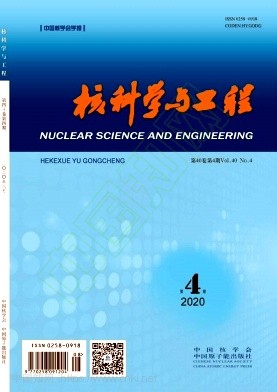
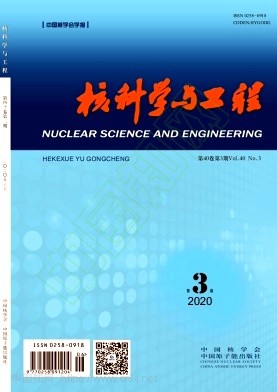
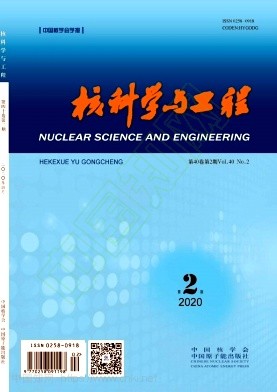
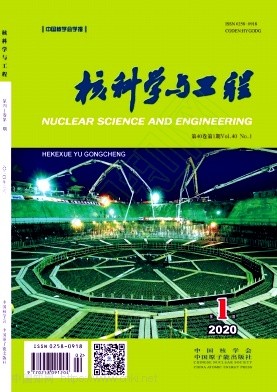
























Microstructural Defect Evolution in Tungsten Carbide Cemented Carbide Irradiated with Helium Ions at Different Temperatures
FENG Kailong;DU Changrong;YU Yao;ZHU Te;YE Fengjiao;ZHANG Peng;LYU Shuang;ZHANG Qiaoli;FAN Ping;MA Hailiang;YUAN Daqing;WU Haibiao;CAO Xingzhong;This study investigates the helium irradiation resistance of tungsten carbide-nickel (WC-Ni) cemented carbide prepared by liquid-phase sintering. The alloy has an average grain size of approximately 0.31 μm and consists of WC grains bonded with a Ni binder phase. Samples were irradiated with 260 keV helium ions to a fluence of 1 × 101? ions/cm2 at different temperatures (RT, 450 °C, 550 °C, and 650 °C), and the defect evolution and helium bubble behavior before and after irradiation were characterized using slow-positron-beam Doppler broadening spectroscopy and transmission electron microscopy. The results show that, for all irradiated samples, the vacancy-type defects are distributed relatively uniformly along the irradiation depth direction. Elevating the irradiation temperature promotes helium atom diffusion and their recombination with vacancies, thus facilitating the formation of helium-vacancy (He-V) complexes. At a relatively low temperature (450 °C), the defect type transforms from a low He/V ratio toward a high He/V ratio. As the temperature further increases to 650 °C, the vacancy formation rate and diffusion rate both increase significantly, promoting the formation of large-size He-V clusters with a low He/V ratio. Transmission electron microscopy observations reveal that helium bubbles with an average size of (1.73 ± 0.53) nm are formed exclusively at the WC/Ni phase interfaces, and preferentially segregate on the Ni side, indicating that the binder-phase interfaces in this alloy are the preferential trapping sites for helium atoms and vacancy-type defects. Because the vacancy formation energy (1.33 eV) and migration energy (0.9 eV) of the Ni phase are significantly lower than those of the WC phase (the formation energies of W and C vacancies are 6.78 eV and 2.56 eV, and their migration energies are 4.05 eV and 6.3 eV, respectively), vacancies are more readily generated and mobile on the Ni side, which facilitates the trapping of helium atoms and thereby promotes the nucleation of He–vacancy complexes and the growth of helium bubbles.
[Downloads: 27 ] [Citations: 0 ] [Reads: 30 ] HTML PDF Cite this article
Study on the Corrosion Behavior of Molybdenum in Liquid Lithium at 723 K
SUN Hubing;MENG Xiancai;ZHANG Dehao;LIU Xueqing;ZHAO Xudong;YAN Zhen;LAN Cunjian;To enhance the database on long-term corrosion of molybdenum-based materials under high-temperature liquid lithium conditions in fusion reactors, a static immersion corrosion method was emploied to systematically investigate the corrosion behavior of molybdenum (Mo) after immersion in liquid lithium at 723 K for 500 h and 1 000 h, respectively. Through mass loss analysis, scanning electron microscopy (SEM)/energy dispersive X-ray spectroscopy (EDS) microstructural characterisation, focused Ion beam (FIB) cross-sectional observation, X-ray powder diffractometer (XRD) phase identification, X-ray photoelectron spectroscopy (XPS) surface valence analysis and Vickers hardness testing, this study systematically reveals the corrosion characteristics, evolution of surface morphology, patterns of elemental distribution and mechanisms of phase transformation. The results indicate that Mo exhibits excellent corrosion resistance in liquid lithium at 723 K; the mass losses after 500 h and 1000 h of corrosion were 2.16 × 10⁻⁴ and 3.09 × 10⁻⁴ g, respectively, whilst the corrosion depth rates were 1.91 × 10⁻³ and 8.76 × 10⁻⁴ g·m-2·h-1, respectively. As the corrosion time increased, the solubility of Mo in liquid lithium gradually approached saturation, and the corrosion rate of the samples showed a decreasing trend; liquid lithium reduced MoO3 on the sample surface to metallic molybdenum, and no new phases were formed throughout the corrosion process, whilst the matrix structure remained stable; the hardness of the Mo samples remained at a stable level before and after corrosion, with no significant changes observed. These research findings provide key experimental evidence for the engineering application of molybdenum in the liquid lithium first-wall system of fusion devices.
[Downloads: 22 ] [Citations: 0 ] [Reads: 32 ] HTML PDF Cite this article
Corrosion Behavior of CLF-1 Steel in Liquid Sn-20Li Alloy
LAN Cunjian;MENG Xiancai;ZHANG Dehao;YANG Guoping;LIU Xueqing;YAN Zhen;SUN Hubing;SHI Wei;CAO Xiaogang;To evaluate the compatibility of CLF-1 steel with liquid lithium-tin alloy, corrosion experiments were conducted in static liquid Sn-20Li alloy at 603 K and 823 K for 528 h under argon protection. Characterization methods including mass loss measurement were employed to examine the mass change, microstructural evolution, elemental distribution, and mechanical properties before and after corrosion. The results showed that the mass loss rates at 603 K and 823 K were 0.62 and 6.78 g·m-2·h-1, with corresponding corrosion depth rates of 0.69 and 7.60 mm·a-1, respectively. The corrosion rate at 823 K was approximately 11 times that at 603 K, and the corrosion resistance grades were classified as acceptable and barely acceptable, respectively. Extensive corrosion occurred on the sample surfaces at both temperatures. However, at 603 K, localized corrosion preferentially initiated along grain boundaries could still be observed in certain regions, whereas at 823 K the surface exhibited a fully uniform corrosion morphology, with only localized areas showing relatively mild attack. During the corrosion process, iron dissolved preferentially over chromium. Regarding tensile properties, no significant changes were observed after corrosion at 603 K. After corrosion at 823 K, the strength of the specimens increased slightly, but the elongation after fracture decreased by approximately 36%, indicating a significant reduction in plasticity. The above results indicate that the compatibility of CLF-1 steel in high-temperature liquid lithium-tin environment is less than satisfactory, and surface protection measures should be considered under service conditions. This study provides data support for the material selection and corrosion protection of liquid metal first walls in fusion reactors.
[Downloads: 15 ] [Citations: 0 ] [Reads: 33 ] HTML PDF Cite this article
Effect of Stearic Acid on ODS-GH3535 Alloy Prepared by Mechanical Alloying
LI Jiabao;ZHANG Jiarong;SHI Xianbo;YAN Wei;SHAN Yiyin;The oxide dispersion strengthened GH3535 alloy (ODS-GH3535) was fabricated via mechanical alloying followed by hot isostatic pressing (HIP). The effects of adding stearic acid as a process control agent (PCA) on the powder morphology, microstructure, chemical composition during ball milling, and the mechanical properties of the consolidated alloy were systematically investigated. The results indicate that the powder particle size tends to stabilize after 60 h of ball milling. Without the addition of stearic acid, the average particle size is approximately 105.4 μm, whereas with stearic acid addition, it decreases significantly to about 20.6 μm. This demonstrates that stearic acid effectively reduces powder agglomeration and refines the particle size. Calculations of crystallite size and lattice strain of the milled powders reveal that stearic acid accelerates grain refinement. At the early stage of milling, it suppresses lattice distortion, however, after 50 h, stearic acid decomposes and dissolves into the powder matrix, which in turn intensifies lattice distortion. Compositional analysis of the alloy powders shows that the addition of stearic acid introduces C, H, and O elements into the powders. These elements are incorporated into the crystal lattice in solid solution form and cannot be removed by subsequent processing. Mechanical testing of the sintered ODS-GH3535 alloy at room temperature indicates that the yield strength increases from 993 MPa to 1465 MPa with the addition of stearic acid, while the elongation decreases from 7.0% to 4.0%. The tensile curve exhibits only an elastic deformation region.
[Downloads: 15 ] [Citations: 0 ] [Reads: 33 ] HTML PDF Cite this article
Effect of Brazing Process on Mechanical Properties of TA15/TC4 Titanium Alloy Thin-walled Structures
LI Xue;TIAN Hao;SUN Guoyan;WANG Yuxuan;WEI Zeguang;MEI Jun;HE Zijun;ZHAO Lei;QI Yan;To address the problems of low bonding rate, high brittleness and unstable mechanical properties of brazed joints of TA15/TC4 titanium alloy honeycomb thin-walled structures, a “sandwich” honeycomb thin-walled structure composed of TA15 panels and TC4 honeycomb cores was taken as the research object. Ti-Zr-Cu-Ni titanium-based filler metal was used for brazing tests at 920~960 ℃ for 20~60 min. The effects of brazing temperature and holding time on the microstructure, element diffusion, bonding rate and mechanical properties of the joints were systematically studied by means of scanning electron microscope, energy dispersive spectrometer, electron backscatter diffraction and pull-out test. The results show that the brazed interface can be divided into weld center zone, diffusion zone and matrix zone. With the increase of temperature or holding time, element diffusion is more sufficient, weld width increases, and temperature has a more significant effect on weld width. At 920 ℃/20 min, the bonding rate is merely approximately 88%, the tensile strength of the joint is 251.03 MPa, and the fracture occurs at the weld. At 940 ℃/40 min, the bonding rate is improved, the microstructure is mainly basketweave structure, the proportion of α-Ti reaches 94.2%, the residual stress is uniformly distributed, the tensile strength reaches 384.47 MPa, and the fracture occurs at the honeycomb matrix. The performance at 960 ℃/20 min is close to that of the optimal process. Based on the comprehensive microstructure and mechanical properties, the optimal brazing process for TA15/TC4 honeycomb thin-walled structure is 940 ℃ for 40 min. This process can obtain brazed joints with high bonding rate, low brittleness and high strength, providing process basis and data support for the engineering application of titanium alloy thin-walled structures in nuclear power, aerospace and other fields.
[Downloads: 30 ] [Citations: 0 ] [Reads: 30 ] HTML PDF Cite this article
R&D status of China low activation martensitic steel
HUANG Qun-ying1,LI Chun-jing1,LI Yan-fen1,LIU Shao-jun1,WU Yi-can1,LI Jian-gang1,WAN Fa-rong2,JU Xin2,SHAN Yi-yin3,YU Jin-nan4, ZHU Sheng-yun4,ZHANG Pin-yuan4,YANG Jian-feng5,HAN Fu-sheng6, KONG Ming-guang6,LI He-qin7,T.Muroga8,T.Nagasaka8 (1.Institute of Plasma Physics,Chinese Academy of Sciences,Hefei of Anhui Prov.230031,China; 2.University of Science and Technology Beijing,Beijing 100083,China; 3.Institute of Metal Research,Chinese Academy of Sciences,Shenyang of Liaoning Prov.110016,China; 4.China Institute of Atomic Energy,Beijing 102413,China; 5.Xi'an Jiaotong University,Xi'an of Shaanxi Prov.710049,China; 6.Institute of Solid State Physics,Chinese Academy of Sciences,Hefei of Anhui Prov.230031,China; 7.Hefei University of Technology,Hefei of Anhui Prov.230000,China; 8.National Institute for Fusion Science,Toki,509-5292,Japan)The Reduced Activation Ferritic/Martensitic(RAFM) steel is considered as the primary candidate structural material for DEMO and the first fusion plant,and widely studied in the world.China low activation martensitic steel(CLAM) is being developed in Institute of Plasma Physics,Chinese Academy of Sciences,under wide collaboration with many other domestic and foreign institutes and universities.This paper summarized the main R&D progress on CLAM,which covered composition optimization of the CLAM,smelting and processing techniques,physical and mechanical property test and evaluation before and after irradiation,compatibility with liquid LiPb,welding techniques etc.Finally,further research and development,and the prospects on its application were stated.
[Downloads: 2,183 ] [Citations: 246 ] [Reads: 26 ] HTML PDF Cite this article
The development of low activation martensitic steels for fusion reactor
HUANG Qun-ying;YU Jin-nan;WAN Fa-rong;LI Jian-gang;Reduced Activation Ferritic/Martensitic steels (RAFMs) are considered as one of the candidate structural materials for the DEMO reactor and the first fusion power re- actor. Researches on RAFMs are carried out in Europe,Japan and USA in recent twenty years and have made some inspiring progness. This paper introduced the worldwide re- search progress and the key issues on RAFMs in details. Meanwhile, the necessity for designing special China Low Activation Martensitic steel (i. e. CLAM steel) was men- tioned. Studies on CLAM steel, such as its metallurgy technology and tests of its prop- erties etc., are underway and stated in the paper.
Conceptual Design of China Lead-based Research Reactor CLEAR-I
WU Yi-can;BAI Yun-qing;SONG Yong;HUANG Qun-ying;LIU Chao;WANG Ming-huang;ZHOU Tao;JIN Ming;WU Qing-sheng;WANG Jian-ye;JANG Jie-qiong;HU Li-qing;LI Chun-jing;GAO Sheng;LI Ya-zhou;LONG Peng-cheng;ZHAO Zhu-min;YU Jie;FDS Team;The conceptual design of 10MWt China Lead-based Research Reactor(CLEAR-I)had been finished,which has critical and subcritical dual-mode operation capability for validation of ADS transmutation system and the Generation-IV lead-cooled fast reactor technology.Lead-bismuth eutectic was selected as primary coolant.The mature fuel and material technology was preferred,and the fuel assembly can be loaded by remote refueling system.CLEAR-I has excellent safety reliability,technology feasibility,experiment flexibility and technical continuity.The overview of reference scenario design,safety characteristics analysis and R&D status of the CLEAR-I was presented.
FUSION RESEARCH IN THE WORLD
Qiu Lijian (Institute of Plasma Physics,Chinese Academy of Sciences P.O.Box 1126,Hefei 230031,China)The present status and future prospect of fusion research and the predicted energy demand in the world have been reviewed.A proposal on development of fusion fission hybrid reactors,including outlined schedule and predicted achievements,has been presented based on the discussion on the strategy and chance of development of fusion energy forward to the future and the advantages of fusion fission hybrid reactors.
Conceptual Design of China Lead-based Research Reactor CLEAR-I
WU Yi-can;BAI Yun-qing;SONG Yong;HUANG Qun-ying;LIU Chao;WANG Ming-huang;ZHOU Tao;JIN Ming;WU Qing-sheng;WANG Jian-ye;JANG Jie-qiong;HU Li-qing;LI Chun-jing;GAO Sheng;LI Ya-zhou;LONG Peng-cheng;ZHAO Zhu-min;YU Jie;FDS Team;The conceptual design of 10MWt China Lead-based Research Reactor(CLEAR-I)had been finished,which has critical and subcritical dual-mode operation capability for validation of ADS transmutation system and the Generation-IV lead-cooled fast reactor technology.Lead-bismuth eutectic was selected as primary coolant.The mature fuel and material technology was preferred,and the fuel assembly can be loaded by remote refueling system.CLEAR-I has excellent safety reliability,technology feasibility,experiment flexibility and technical continuity.The overview of reference scenario design,safety characteristics analysis and R&D status of the CLEAR-I was presented.
Current status of generation Ⅲ nuclear power and assessment of AP1000 developed by Westinghouse
ZANG Ming-chang (China Power International Holding Ltd, Beijing 100101, China)In order to make greater contributions to the environment, new nuclear power systems will be needed to meet the increase of electricity demand and to replace plants to be decommissioned. A series of new designs, so called Generation Ⅲ and Generation Ⅲ+, are being developed to ensure their deployment in a Near-Term Deployment Road-map in US by 2010 and in Europe by 2015. The AP1000, developed by Westinghouse, is a two-loop 1000MWe PWR with passive safety features and extensive simplifications to enhance its competitiveness in cost and tariff. It is the first Generation Ⅲ + plant receiving the Final Design Approval by the US NRC. This paper briefly describes AP1000 design features and technical specifications, and presents a more detailed design evaluation with reference to relevant literatures. Both the opportunity and challenges for nuclear power development in China during the first decade of the 21st century in a historic transition from Gen Ⅱ to Gen Ⅲ are analyzed. The key is to balance risks and benefits if the first AP1000 to be settled down in China.
Development Status and Prospects of Lead-based Reactors
WU Yi-can;WANG Ming-huang;HUANG Qun-ying;ZHAO Zhu-min;HU Li-qin;SONG Yong;JIANG Jie-qiong;LI Chun-jing;LONG Peng-cheng;BAI Yun-qing;LIU Chao;ZHOU Tao;JIN Ming;FDS Team;Lead-based reactor has become the most promising candidate for Generation IV nuclear system,accelerator driven sub-critical system and fusion reactor,due to its good neutronics,thermal-hydraulics and inherent safety properties,and most likely it will impact the development trend of nuclear energy.In this paper,the development status and prospects of lead-based reactors were introduced and the potential role in future nuclear energy development was summarized.
World Development of Nuclear Power System and High Temperature Gas-cooled Reactor
WU Zhongxin, ZHANG Zuoyi (Institute of Nuclear Energy Technology, Tsinghua University, Beijing, 100084, China)The major challenges of the nuclear power are economic competition, safety, profilication resistance and waste storage. The safety of the nuclear power plants has been enhanced continuously in order to improve the public acceptance. The de regulation of the electricity market in the United States and Europe encourages the competition between the different power generation technologies. The waste storage has been paid great attention. The ALWRs like ABWR, System 80+, EPR and AP 600 development from mid of 1980s are the major commercial products available in the market in the near future. When the time enter the 21 century, US DOE is planning to develop the Generation IV nuclear power system, in order to design one or more nuclear power systems that is market available before or in the year of 2020 and could be used to replace the current nuclear power plants. The modular pebble bed High Temperature Gas cooled Reactor (HTGR) is considered as a prefer candidate in the Generation IV nuclear power systems. The South Africa selected the modular HTGR as the reactor type to develop. The 10 MW test HTGR (HTR 10) designed and constructed in Tsinghua University Beijing is scheduled to reach critical in the year of 2000. Based on the HTR 10 project, China has established her preliminary capability of designing, constructing and manufacturing pebble bed modular HTGRs.
Analysis of Nuclear Energy Utilization under the Background of “Carbon Peaking and Carbon Neutrality”
XING Ji;GAO Li;HUO Xiaodong;WU Yuxiang;DONG Yemin;LUO Yibo;Under the goal of carbon peaking and carbon neutrality,China's energy system will speed up the transformation towards clean and low-carbon. Different from the high carbon emission of traditional fossil fuels,nuclear energy has advantages like low carbon emission,high energy density,resistance of extreme natural conditions and guarantee of safe and stable electricity,etc. It's an essential part of China's energy system transformation. By reviewing and summarizing the current situation of China's energy system,this paper analyzes the developing opportunities of nuclear energy in the area of electricity generation,heating,desalination,hydrogen production,etc. It puts forwards problems need to be paid attention and suggestions on the high quality development of nuclear energy,and provides an idea for developing nuclear energy in a positive and orderly way”.
Tracking the information about your manuscript
Communicate with the editorial office
Query manuscript payment status Editorial OfficeCollecting, editing, reviewing and other affairs offices
Managing manuscripts
Managing author information and external review Expert Information Expert ReviewOnline Review
Online Communication with the Editorial Department
Guide for Author
Page Views
Page visits today: 20